Puraiva / Blog / Cortisol & Stress
The Anti-Cortisol Diet: Exactly What to Eat to Lower Stress Hormones
A practical, food-first playbook for lowering cortisol — the macronutrient timing, specific foods, and eating patterns that flatten a dysregulated stress curve.
By Dr. Sarah Mitchell · · 10 min read
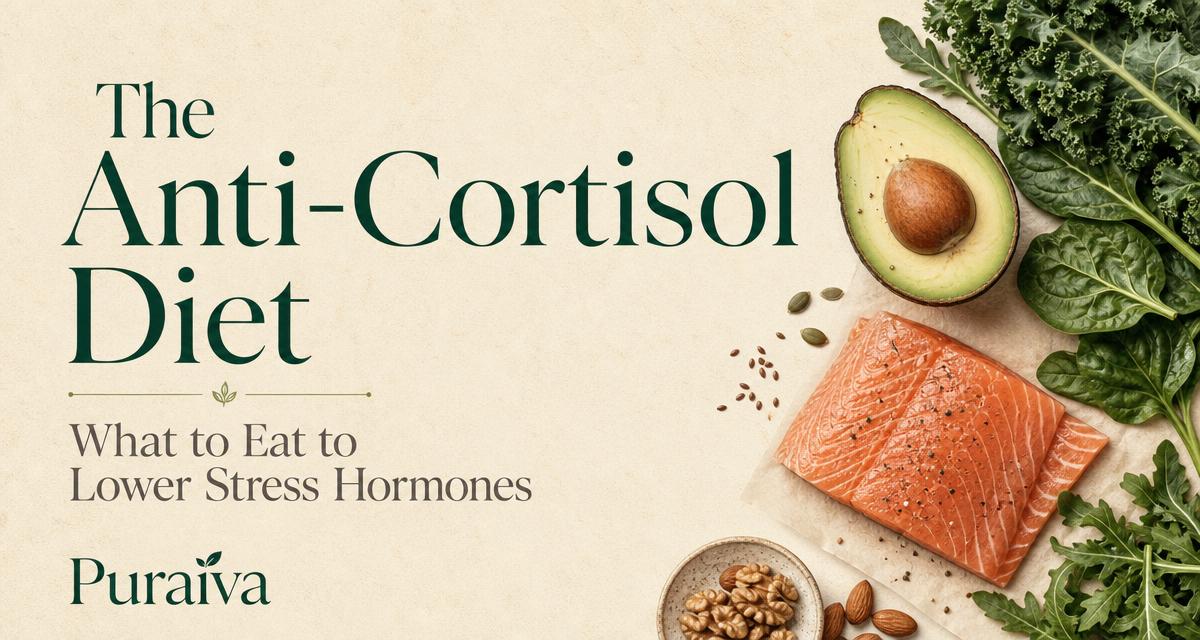
If your cortisol is dysregulated, what you eat and when you eat it is the single fastest lever you can pull. Sleep and breathwork matter — but blood sugar volatility is the invisible driver behind most 3 AM wake-ups, afternoon crashes, and midsection weight. This is the practical, food-first playbook we use with customers rebuilding a broken cortisol curve.
Part of our Cortisol & Stress Recovery hub — start with the pillar guide on how to lower cortisol levels naturally.
This guide is a companion to our flagship complete guide to lowering cortisol naturally — start there for the full framework, then use this article to build your grocery list.
Why Diet Is the Fastest Cortisol Lever
Every blood sugar crash is a cortisol event. Your body reads a glucose dip as a threat and releases cortisol to mobilize backup fuel from the liver. If you skip breakfast, drink coffee on an empty stomach, or eat a carb-only lunch, you're firing cortisol 3–5 extra times per day without noticing. Fix the eating pattern and you remove the majority of the daily cortisol load.
Rule 1: 30 Grams of Protein Within 60 Minutes of Waking
This one rule flattens the morning cortisol spike in about 80% of people within a week. Protein blunts the glucose response of anything you eat with it, and it provides the amino acids (glycine, tryptophan, tyrosine) your HPA axis needs to regulate itself.
Practical hits: 3 eggs + Greek yogurt, a protein smoothie with 30g whey, cottage cheese with berries, or leftover salmon with sourdough. Skip the "coffee and a pastry" default — it's the worst possible input for a stressed nervous system.
Rule 2: Protein + Fat With Every Carb
Never eat a carb naked. A banana becomes a banana with almond butter. Toast becomes toast with eggs and avocado. Rice becomes rice with chicken thighs and olive oil. This single habit prevents the glucose spike → crash → cortisol cascade that defines a dysregulated day.
Rule 3: Front-Load Calories, Taper Toward Night
Cortisol should be high in the morning and low at night. Big dinners with lots of carbs invert that curve — they spike insulin late, trigger a rebound glucose drop around 2–3 AM, and wake you up wired. Eat your biggest meal at lunch, a moderate dinner 3+ hours before bed, and a small protein-fat snack (a spoon of almond butter, boiled egg) if you're prone to 3 AM wake-ups.
Foods That Actively Lower Cortisol
- Fatty fish (salmon, sardines, mackerel) — omega-3 EPA/DHA reduce cortisol response to acute stress by up to 33% in trials. Target 3 servings a week.
- Dark leafy greens (spinach, chard, kale) — magnesium is the mineral that regulates the HPA axis. Chronic stress depletes it; food is the first refill.
- Berries and citrus — vitamin C directly buffers cortisol production in the adrenal cortex. A cup of berries with breakfast is a cheap daily hedge.
- Fermented foods (kefir, kimchi, sauerkraut, yogurt) — the gut-brain axis is a major cortisol regulator. Even 2–3 tablespoons daily nudges the vagus nerve toward parasympathetic.
- Dark chocolate 85%+ — 40g daily has been shown to reduce urinary cortisol markers. Not a license to eat a bar; a small square is the therapeutic dose.
- Slow-cooked meats and bone broth — glycine and collagen support GABA, which counterbalances cortisol overnight.
- Avocados, olive oil, nuts — monounsaturated fats stabilize blood sugar between meals better than anything else.
Foods That Silently Raise Cortisol
- Caffeine on an empty stomach — delay coffee 90 minutes after waking and eat protein first.
- Alcohol within 3 hours of bed — initially sedating but fragments deep sleep and doubles nighttime cortisol.
- Ultra-processed seed oils (soybean, corn, cottonseed) — inflammation is a cortisol trigger.
- High-glycemic foods eaten alone — bagels, cereal, juice, candy, most pastries. Never solo; always paired.
- Aggressive intermittent fasting if you're already stressed — long fasts spike cortisol in already-dysregulated people.
The Anti-Cortisol Day (Sample Template)
- Waking: Water with a pinch of sea salt and lemon. Sunlight in eyes for 5–10 minutes.
- Within 60 minutes: 30g protein breakfast (eggs, Greek yogurt, or protein smoothie) + berries.
- 90 minutes after waking: Coffee, ideally with food.
- Lunch (largest meal): Fatty fish or grass-fed beef + leafy greens + slow carb (sweet potato, quinoa) + olive oil.
- Afternoon: Fermented snack (kefir, yogurt) + handful of nuts. No caffeine after 2 PM.
- Dinner (3+ hours before bed): Protein + vegetables + smaller carb serving.
- 90 minutes before bed: Optional protein-fat snack if 3 AM wake-ups are a pattern. Magnesium Glycinate.
The Magnesium Piece You Can't Get From Food Alone
Even a perfect diet often can't fully replace magnesium in a chronically stressed person, because cortisol dumps magnesium into your urine faster than most people can eat it back. That's why we pair the diet with 300–400 mg of elemental magnesium as glycinate 60–90 minutes before bed. Read the mechanism in does magnesium lower cortisol, and see the supplement stack in supplements to reduce cortisol.
Personalize this
Which cortisol archetype are you?
The right eating pattern depends on your specific dysregulation type. Take the free 2-minute assessment to get a personalized food + supplement stack.
The Bottom Line
Fixing cortisol through food comes down to three habits: 30g of protein within 60 minutes of waking, protein + fat with every carb, and front-loaded eating that tapers before bed. Add in fatty fish, leafy greens, berries, and fermented foods; remove empty-stomach caffeine, late alcohol, and naked carbs. Most people feel a shift in energy and sleep within 10–14 days.
This article is educational and not medical advice. Consult your healthcare provider before making major dietary changes, especially if you take prescription medication.